

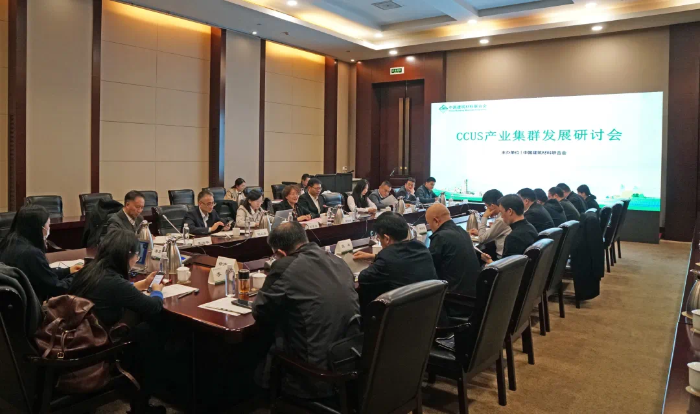
On November 14, the China Building Materials Federation (CBMF) successfully hosted the CCUS Cluster Development Seminar. The event aimed to facilitate the exchange of latest research findings, application practices, and development trends in carbon capture, utilization and storage (CCUS) technologies and industrial cluster development across key carbon-intensive sectors, including building materials, petrochemicals, chemicals, and steel. The seminar sought to advance cross-industry and cross-sector cluster-based and scaled-up deployment of CCUS in China.
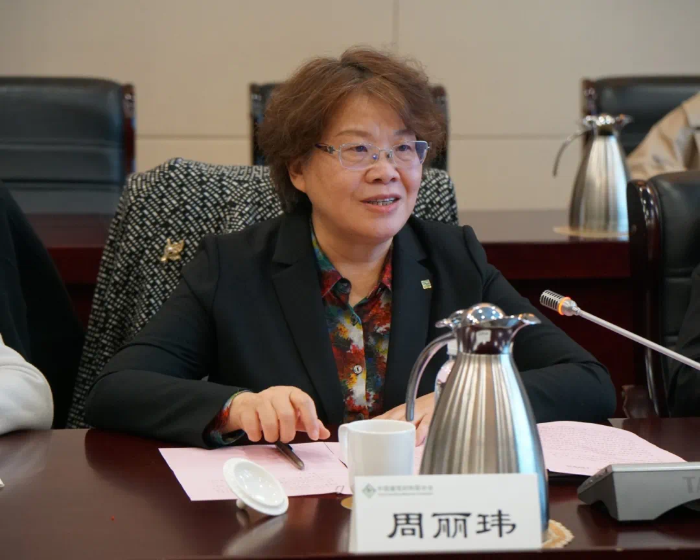
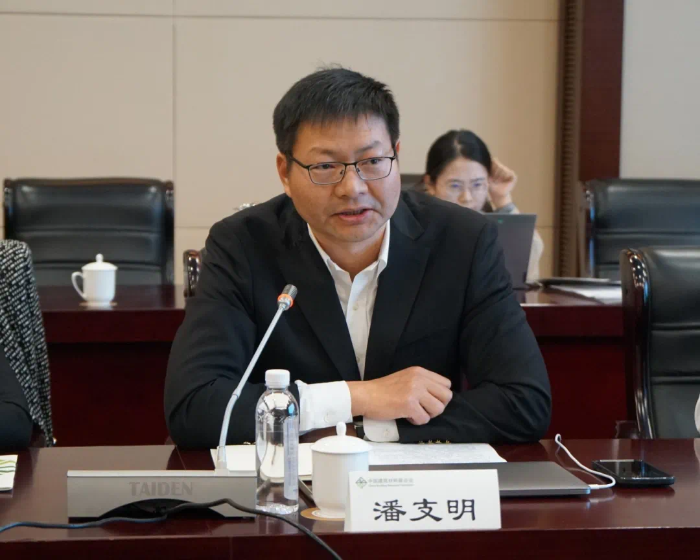
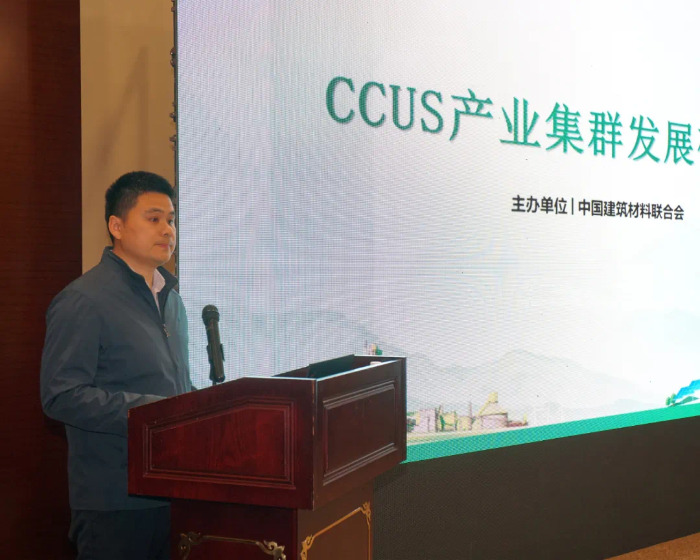
Zhou Liwei, Director of Standards and Quality and Deputy Secretary-General of CBMF, and Pan Zhiming, Director of Industrial Program at the Natural Resources Defense Council (NRDC), attended the seminar and delivered remarks. More than 40 representatives from organizations including the China Center for International Science and Technology Exchange (21st Century Agenda Management Center), China Chemical Energy Conservation Technology Association, Shengli Oilfield Company of Sinopec, China University of Geosciences (Beijing), Wuhan University of Technology, Baowu Central Research Institute, Huaxin Cement, CR Cement Technology, Conch Industrial Technology Research Institute, China Building Materials Machinery Group Co., Ltd., Beijing Jinyu Beishui Environmental Technology, Jining Conch, Shandong Jin Jing Technology, as well as media outlets such as Caijing Magazine, China Building Materials Magazine, and Zibo Daily, participated in the seminar. The meeting was co-chaired by Cao Yunhui, Director of the Standards and Quality Department of CBMF, and Zhao Xilong, Senior Manager of NRDC’s Industrial Program.
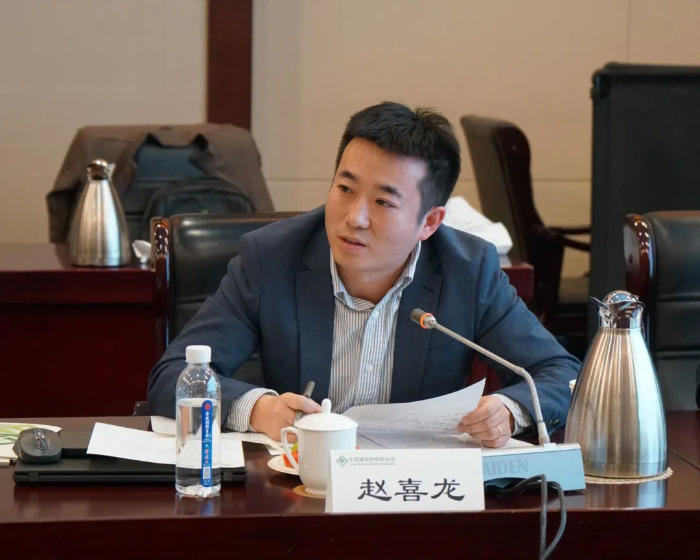
The seminar highlighted that CCUS, as a globally recognized large-scale technology for deep CO₂ reduction and resource utilization, represents a viable pathway for hard-to-abate sectors such as cement, and is an essential technology supporting future carbon circularity. It is also an indispensable “backstop” technology for achieving China’s carbon-neutrality goals. Driven by China’s dual-carbon targets, CCUS in the country has progressed from early-stage exploration toward pre-commercialization in recent years, showing clear trends of scaling up and clustering. Through CCUS cluster development, industries can share key infrastructure such as CO₂ transport and storage systems, establishing integrated value chains across sectors—now an inevitable direction for CCUS technological evolution.
Given the cement industry’s dispersed emission sources, mismatch between CO₂ sources and storage sites, and underdeveloped transport and storage infrastructure, it is difficult for the industry to independently establish full-chain CCUS projects covering capture, transport, and storage. Therefore, cluster-based CCUS development offers a cost-effective “ride-along” opportunity for expanding CCUS applications in the cement sector. Policy guidance and systematic planning also serve as crucial driving forces.
Expert Presentations
During the guest presentation session:
Peng Xueting, Assistant Researcher at the 21st Century Agenda Management Center, presented the China CCUS Technology Development Roadmap (2025), which elevates CCUS from a strategic reserve technology to an indispensable component of China’s carbon-neutrality technology system.
Wang Ziwei, Senior Low-Carbon Manager at the China Chemical Energy Conservation Technology Association, introduced CCUS technology development in the petrochemical sector, the establishment of standards, domestic and overseas engineering practices, and the status and outlook of CCUS industrial clusters in China.
Tao Congxi, Chief Expert at CR Cement Technology, shared the company’s progress in in-situ CO₂ capture technology R&D and the full-chain CCUS project at CR Cement (Fengkai).
Zhou Liang, Deputy Manager of the CCUS Project Department at Shengli Oilfield, presented typical field experience and technological advances, including high- and low-concentration CO₂ capture, pipeline transport, terrestrial reservoir technologies, and multi-state CO₂ injection.
Liu Daoqing, Senior Principal Researcher at Baowu Central Research Institute, introduced carbon emissions and CCUS applications in the steel industry, and analyzed the major challenges—including cost, technical bottlenecks, standards, source-sink matching, business models, cross-sector collaboration, and safety.
Professor Li Zhiping, former Dean of the School of Energy at China University of Geosciences (Beijing), discussed the history, technical principles, key projects, and future trends of CO₂-EOR and CO₂ storage.
Roundtable Discussion
During the roundtable session, participants conducted in-depth discussions on the key bottlenecks facing CCUS development, recommendations for cluster planning, benefit-sharing and safety supervision mechanisms, and specific actions and challenges for the cement industry to participate in CCUS cluster development. They also exchanged views on the economics of downstream CO₂ utilization technologies such as mineralization and chemical conversion, the synergy between “Zero-Carbon Factories” and CCUS in the cement sector, CCUS standards development, and methodologies for calculating emission reductions from CCUS and carbon-mineralization projects in the building materials industry.
Technical Visit
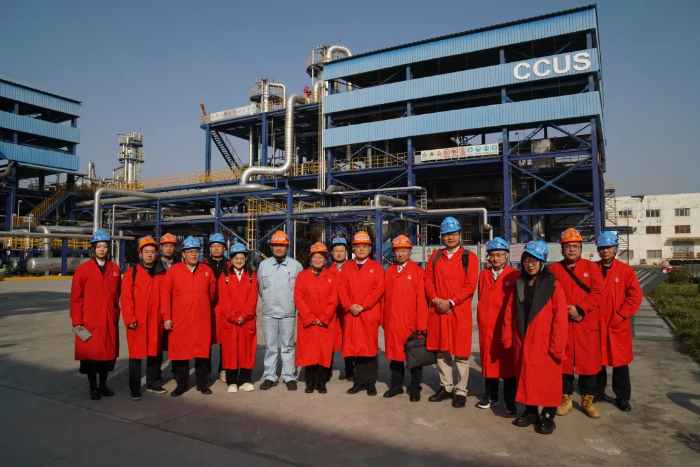
Following the meeting, participants visited the Qilu Petrochemical–Shengli Oilfield one-million-ton CCUS project, and held discussions with responsible personnel from both Qilu Petrochemical and Shengli Oilfield to gain deeper insights into operational experience and project development.
Editor: Zhang Hanwen
Reviewer: Shen Yulu, Li Yuemei