

1. Heidelberg Materials Successfully Completes World’s First Plasma-Heated Cement Rotary Kiln Trial
On 17 February 2025, International Cement Review reported that Heidelberg Materials had successfully completed the world’s first continuous operation test of a plasma-heated cement rotary kiln, validating the technical feasibility of stable clinker production using plasma technology. Powered entirely by electricity, the plasma-based process produces an exhaust gas stream consisting almost exclusively of pure CO₂, thereby significantly simplifying carbon capture processes while reducing both energy consumption and capital expenditure, as well as overall emissions. Test results show that the fuel-ash-free plasma process yields higher-quality clinker, characterized by finer C₃S crystal structures and faster cement hydration kinetics. The kiln achieved a maximum continuous operation of 54 hours, marking a global first. This breakthrough provides a new technological pathway for the electrification of cement production and advanced CCS deployment, representing a major milestone toward deep decarbonization of the cement industry.
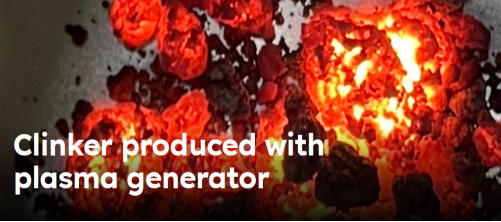
Figure 1: Schematic diagram of the plasma kiln reaction process
Source: Heidelberg Materials official website
2. World’s First Cloud–Edge Collaborative Large AI Model for Cement Industry Released
On 23 April 2025, China Building Materials Magazine reported that the China Building Materials Federation (CBMF), Anhui Conch Group, and Huawei Technologies jointly hosted the Cement Artificial Intelligence Large Model Release Conference in Wuhu, Anhui Province.With CBMF’s support, Conch Group and Huawei jointly developed a comprehensive AI operating system based on Huawei Cloud Pangu prediction models, computer vision models, natural language processing models, and massive volumes of cement industry data. The system integrates centralized training, edge-side inference, cloud–edge collaboration, continuous learning during operation, and ongoing optimization. The released large model has already been deployed across more than 40 application scenarios in five major categories, including quality control, production optimization, equipment management, safety management, and intelligent Q&A. As the first cloud–edge collaborative large AI model in the global building materials sector, this achievement represents a milestone in advancing the digital and intelligent transformation of the cement industry.
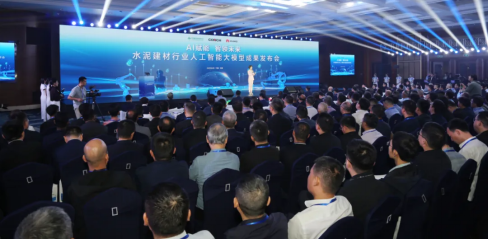
Figure 2: Cement AI Large Model Release Conference
Source: China Building Materials Magazine
3. ETH Zurich Develops “Photosynthetic Living Materials” with High CO₂ Absorption Efficiency
On 23 April 2025, Nature Communications reported that a research team from ETH Zurich successfully developed a novel “photosynthetic living material” by embedding photosynthetic cyanobacteria into a hydrogel matrix using 3D printing techniques. Through precise structural design of the hydrogel, the material achieves long-term dual-path carbon sequestration under ambient temperature, atmospheric pressure, and natural light conditions. The cyanobacteria convert atmospheric CO₂ into biomass via photosynthesis while simultaneously inducing the formation of insoluble carbonate minerals, enabling synergistic reversible biological carbon fixation and irreversible mineral carbonation. The cyanobacteria remain viable and metabolically active for over 400 days. Each gram of hydrogel sequesters approximately 2.2 ± 0.9 mg of CO₂ within 30 days, accumulating 26 ± 7 mg over 400 days. The research team envisions applying this low-maintenance material to building façades or surface coatings, offering a novel technological route toward low-energy, carbon-neutral buildings.
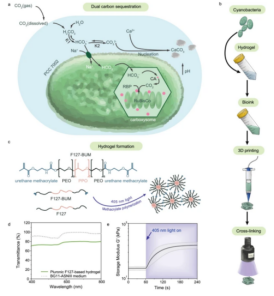
Figure 3: Fabrication of photosynthetic living materials
Source: Nature Communications
4. Major Breakthroughs Achieved in Cement-Based Power Generation and Energy Storage Materials
On 9 May 2025, Xinhua News Agency reported that a research team from Southeast University developed N-type and P-type self-power-generating cement-based materials, along with a self-storage cement-based supercapacitor. The N-type material exhibits a Seebeck coefficient ten times higher than the maximum previously reported for conventional cement-based thermoelectric materials. The P-type material demonstrates a power factor 51 times higher and a thermoelectric figure of merit (ZT) 42 times higher than existing cement-based thermoelectric benchmarks. The cement-based supercapacitor maintains high mechanical strength while offering excellent electrochemical reversibility and rapid charge transfer. After 20,000 charge–discharge cycles, it retains 95% of its initial specific capacitance. When fabricated into energy-storage wall panels, it can store approximately one day’s electricity consumption for a residential household. When integrated with photovoltaic systems, it improves PV utilization efficiency by over 30%.
On 17 September 2025, Cell Reports Physical Science reported that Aarhus University (Denmark) developed a groundbreaking “living” cement supercapacitor by embedding the electroactive microorganism Shewanella oneidensis into cement. The material forms conductive biofilm networks while maintaining structural load-bearing capacity. Dormant microorganisms can be reactivated by nutrient supplementation (lactate), restoring approximately 80% of energy-storage capacity, a feature unattainable in conventional batteries. The material retains about 85% capacitance after 10,000 cycles.
On 1 October 2025, the Massachusetts Institute of Technology (MIT) announced a major advance in capacitive concrete technology, increasing energy density by an order of magnitude. Using focused ion beam scanning electron microscopy for 3D reconstruction, the team revealed nanoscale conductive networks within concrete and optimized electrolyte systems, enabling over 2 kWh of energy storage per cubic meter of concrete.
These technologies offer broad application potential in walls, pavements, and infrastructure, reducing dependence on external power grids and supporting clean, low-carbon transitions in buildings and transportation.
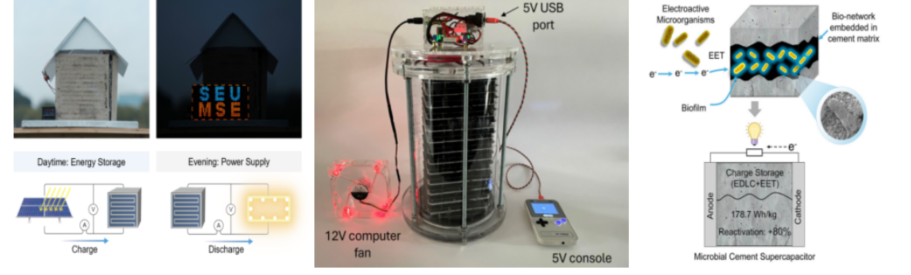
Figure 4: Cement energy-storage bricks / microbial cement supercapacitor / 12-V supercapacitor prototype
Sources: Southeast University School of Materials Science; Cell Reports Physical Science; MIT official website
5. South China University of Technology Develops Oxidation-Resistant High-Entropy Carbide Material Enduring 3600 °C
On 5 June 2025, Advanced Materials reported that a research team from South China University of Technology successfully developed an oxidation-resistant high-entropy carbide ceramic capable of withstanding temperatures up to 3600 °C, using a high-entropy multicomponent compositional design strategy. During laser oxidation tests at 3600 °C with a heat flux of 30 MW·m⁻², the material exhibited an oxidation rate of only 2.7 µm·s⁻¹, significantly lower than that of previously reported ultra-high-temperature materials. Its exceptional oxidation resistance arises from differential oxygen adsorption tendencies among constituent elements, forming a high-viscosity oxide layer structured around finely dispersed ultra-high-melting-point WO₃, which effectively impedes oxygen diffusion into the substrate. This novel ultra-high-temperature ceramic overcomes long-standing research bottlenecks and shows broad application prospects in aerospace, new energy, and other extreme high-temperature environments.
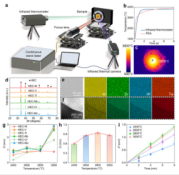
Figure 5: Laser oxidation testing of oxidation-resistant high-entropy carbide
Source: Advanced Materials
6. AGC and University of Tokyo Develop Revolutionary Technology Boosting Glass Processing Speed by One Million Times
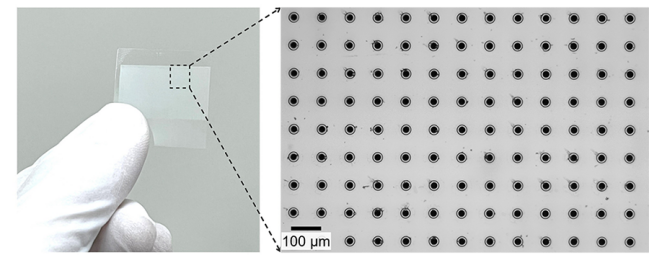
On 11 June 2025, Science Advances reported that AGC Inc. and the University of Tokyo jointly developed a revolutionary laser processing technology that increases the processing speed of glass and other transparent materials by a factor of one million compared with conventional laser methods. Targeting the urgent demand for high-rigidity glass substrates in high-speed, low-power semiconductor packaging, the researchers proposed a novel Bessel-beam Transient Selective Laser Absorption (Bessel-TSL) mechanism. Using an axicon lens to generate dual Bessel beams, picosecond and microsecond laser pulses are sequentially applied from the same direction. Unlike conventional femtosecond lasers relying on ultra-high peak intensities, this approach employs low-power light sources at the hundred-watt level, with energy densities four orders of magnitude lower, effectively suppressing plasma reflection. The method overcomes long-standing efficiency bottlenecks in transparent material processing while eliminating liquid waste, offering a combination of ultra-high efficiency, low energy consumption, and green manufacturing.
Figure 6: Glass substrate with densely packed through-holes fabricated at ultra-high speed (100 µm spacing)
Source: Science Advances
7. RAK Ceramics Commissions World’s First High-Purity CO₂ Capture and Utilization System for the Ceramics Industry
On 22 October 2025, the Emirates News Agency reported that RAK Ceramics, in partnership with Gulf Cryo, officially commissioned the UAE’s first high-purity CO₂ capture and utilization (CCU) facility, representing the ceramics industry’s first end-to-end high-purity CO₂ CCU system. The facility captures approximately 17,000 tonnes of CO₂ annually directly from exhaust streams and purifies it into 99.99% food-grade CO₂, eliminating conventional venting during carbon handling while significantly reducing emissions management costs. Compared with traditional CCS models, the direct industrial utilization of high-purity CO₂ substantially improves economic sustainability. The project marks the first realization of source-end high-purity carbon utilization in the ceramics sector, providing a practical pathway for broader industrial transitions from emission reduction to value-added carbon utilization
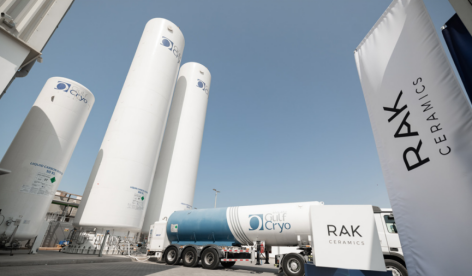
Figure 7: :On-site facility image
Source: Emirates News Agency
8. National University of Defense Technology Develops Material Absorbing Ultra-Wideband Radar Waves at 1000 °C
On 25 November 2025, Nature Communications reported a breakthrough by the National University of Defense Technology (NUDT) in RuO₂/glass resistive materials. Leveraging quantum tunneling effects, electrons are able to pass through glass barriers between RuO₂ nanoparticles with minimal sensitivity to atomic thermal vibrations. As a result, the material maintains an ultra-low temperature coefficient of resistance, ranging from –95 to –365 ppm °C⁻¹, from room temperature up to 1000 °C. Even at extreme temperatures, it exhibits stable absorption of ultra-wideband radar waves from 2 to 12 GHz, with exceptional robustness against temperature variation, thermal shock, polarization, and incident angle. This material provides a critical solution for enabling stealth performance in hypersonic vehicles during extreme thermal barrier penetration.
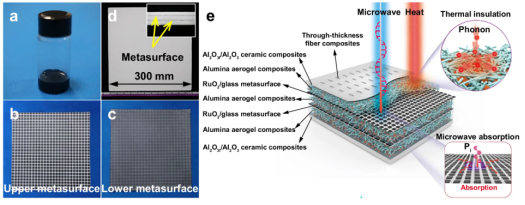
Figure 8: Material design concept and physical samples
Source: Nature Communications
9. University of Colorado Develops Highly Transparent Super-Insulating Material
On 11 December 2025, the University of Colorado Boulder published research in Science introducing a paradigm-shifting mesoporous optically transparent thermal insulator named MOCHI (Mesoporous Optically Clear Heat Insulator), combining ultra-high transparency with exceptional thermal insulation. By precisely controlling nanotube network dimensions, orientation, and pore structure, MOCHI achieves over 99% visible light transmittance and thermal conductivity as low as 10–12 mW (m·K)⁻¹, even below that of still air. More than 90% of the material’s volume is air, with pore sizes of 5–30 nm, effectively suppressing heat conduction and light scattering. A 2.5-cm-thick MOCHI-based insulating glass unit achieves a thermal resistance of R = 2.64 (m²·K)/W, outperforming conventional building walls while significantly reducing heating and cooling energy demand without compromising visibility or daylighting. The material offers a new pathway for next-generation smart windows and non-concentrating solar thermal collectors.
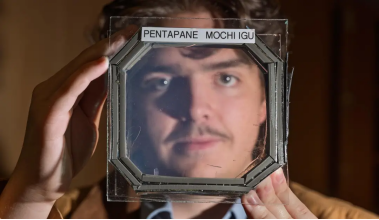
Figure 9: Sample held by researchers consisting of five MOCHI layers and two glass panes
Source: Science
10. CBMF Showcases Seven Breakthrough Innovations at “Superior Products for Advanced Industry” Technology Launch Event
On 3 December 2025, CCTV News Channel and CCTV.com reported on the Second “Superior Products for Advanced Industry” Breakthrough New Technologies and Products Launch Event for the building materials industry, organized by the China Building Materials Federation (CBMF). Seven major technological breakthroughs—described as “world-first” or “globally leading”—were unveiled, including: A low-carbon digital R&D and intelligent design platform for building materials,Laser chemical vapor deposition technology for highly oriented ultra-pure silicon carbide,A 10,000-ton-scale “zero-employee” cement demonstration plant, Aerogel insulation products resistant to 1300 °C for new energy batteries, High signal-to-noise ultra-light-blocking glass, “Ultra-cool cement”: inorganic radiative cooling metamaterials,8.6-generation OLED glass substrates. These innovations represent concrete achievements under China’s 14th Five-Year Plan, including “challenge-based R&D,” “Six-Zero” factory construction, and super-materials development for inorganic non-metallic industries, while outlining a broad vision for the future of building materials applications.
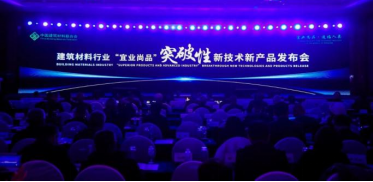
Figure 10: Second “Superior Products for Advanced Industry” Breakthrough Technology Launch Event
Source: CCTV News Broadcast